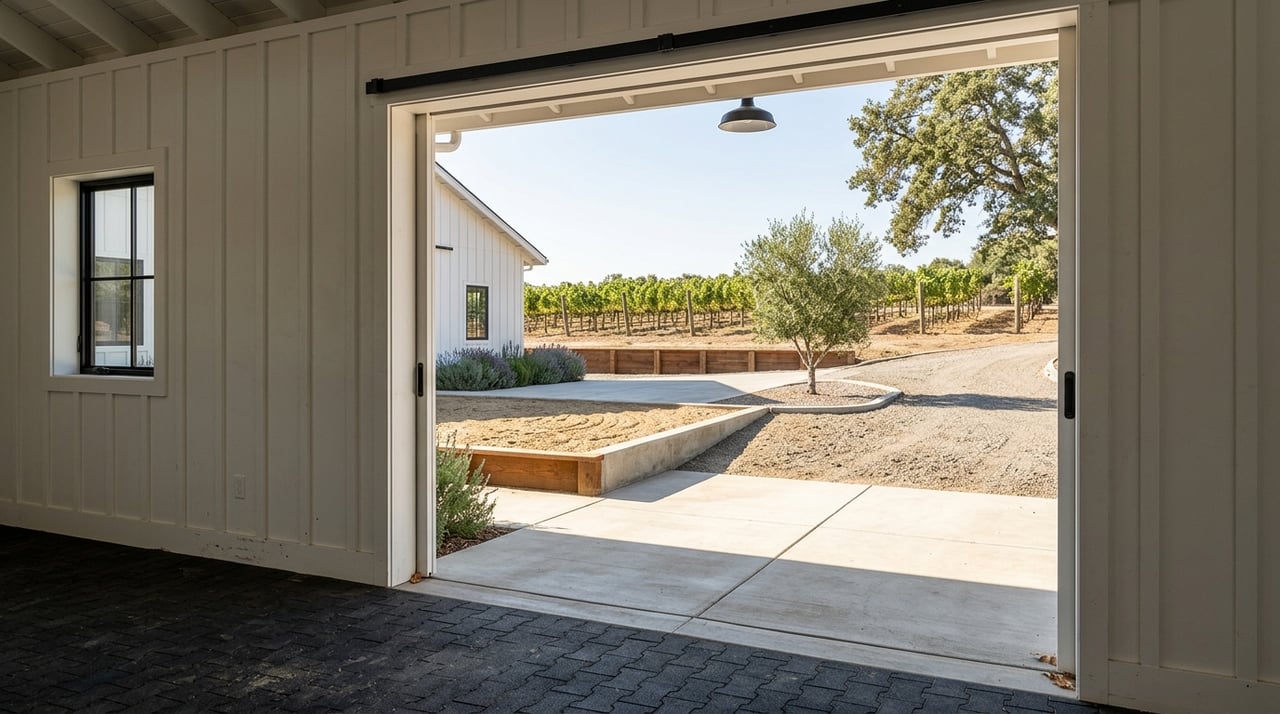
Penngrove Hobby Vineyard Design for Barn and Vineyard
July 2, 2026
July 2, 2026
Dreaming about a few acres of vines, a practical barn, and room to move in Penngrove? It is an appealing vision, but the success of that vision usually comes down to site planning long before the first post is set or the first vine is planted. If you want to create a hobby vineyard and barn that feel natural, functional, and easier to permit, it helps to understand how Penngrove parcels really work. Let’s dive in.
Penngrove sits in unincorporated Sonoma County, east of Highway 101 between Cotati and Petaluma. In this corridor, access matters more than many buyers expect because Petaluma Hill Road and Old Redwood Highway function as important alternate north-south routes. That makes early planning for driveway placement, haul routes, and trailer turning space especially important.
Climate is just as site-specific. Sonoma County has a Mediterranean climate with hot, dry summers and cool, wet winters, but Penngrove properties can vary sharply from one parcel to the next. Marine air, hills, valleys, fog patterns, wind, and the Petaluma Gap can change growing and building conditions in ways that are noticeable even on neighboring rural properties.
For you, that means a hobby vineyard and barn plan should not start with a generic county assumption. It should start with the actual conditions on your land, including slope, sun exposure, air drainage, wind, and wet-season runoff.
Before you think about vine rows or a barn pad, think about how you will move through the property. Rural planning works best when vehicles, horse trailers, farm equipment, and deliveries can circulate safely without forcing awkward turns or unnecessary grading.
A practical layout often considers:
In Penngrove, this step matters because access and circulation affect nearly every later decision. If your driveway, barn entrance, and equipment areas are well placed from the start, the rest of the site plan usually becomes simpler.
Sonoma County’s Vineyard Site Assessment Guide puts strong emphasis on roads, slope, soils, water access, erosion, vegetation, streams, riparian corridors, and wet areas. That is a useful framework for hobby vineyard planning because the best layouts usually follow the land instead of fighting it.
If you are evaluating a parcel, pay close attention to where water already wants to go. A site that looks dry and straightforward in summer may reveal drainage challenges in winter. Natural topography often tells you where vine rows, a barn, or an arena can fit with less disturbance.
This is one of the biggest differences between a property that feels effortless and one that becomes a constant project. Minimal cut-and-fill, more natural drainage, and careful siting can help protect both usability and long-term maintenance.
One of the most important county rules is also one of the easiest to overlook. In Sonoma County, a permit is required before starting vineyard or orchard site development or related work, including preparatory clearing and soil disturbance, unless an exemption applies. County materials also state that approval must be in place before work begins.
That means you should not assume you can clear first and sort out permits later. If you are planning to plant or replant vines, the county’s VESCO process may be part of your timeline from the very beginning.
County guidance also ties vineyard development to erosion control and drainage protection. The goal is to minimize sedimentation, maintain natural offsite drainage patterns, and limit post-development runoff. If your project also includes grading or drainage improvements, a separate grading permit may be required.
A barn may qualify for Sonoma County’s agricultural exemption path in some cases, but not automatically. Permit Sonoma offers a New Building Permit - Agricultural Exemption for buildings designed and constructed to house farm machinery, animals, supplies, or harvested products on parcels of 5 acres or more.
Even when that path may apply, zoning clearance is still required for new buildings, structures, and additions. Depending on the parcel, scenic-roadway setbacks, waterway setbacks, or administrative design review may also come into play.
For buyers, the practical takeaway is simple: do not treat the word “agricultural” as a shortcut. The parcel size, the building’s actual use, and the site context all matter.
When you picture an arena or barnyard, it is easy to focus on footprint and layout. In reality, earthwork and drainage are often just as important as the structure itself.
Sonoma County notes that a storm water permit may be required for drainage at facilities that are not part of another construction permit. An encroachment permit is also required for work in the county right-of-way, including driveway aprons and utility lines.
This is why the best arena and barn concepts begin with the ground. If the site can support clean circulation, stable footing, and controlled runoff, you are in a much better position to create an equestrian area that works well through all seasons.
On rural property, water and wastewater are often the real gatekeepers of your design. If public sewer is not available, Sonoma County says the property must have a septic system, with separate construction, design, and site-evaluation applications.
Water planning deserves extra care right now. Sonoma County requires a well construction permit for a new or replacement supply well, for destroying an existing well, or for boring 15 feet or more below original ground surface. As of the date of this Blog, non-emergency well permits are suspended under a Dec. 17, 2024 court order.
That means you should not assume a new well is available as a simple next step. The county also uses Groundwater Availability Areas for site-specific water review, and parcels on a boundary may be reviewed under the more restrictive classification, sometimes with special studies or proof of permanent access to an off-parcel water source.
Before you make major plans, confirm the parcel’s zoning, permit history, and land-use constraints through Permit Sonoma’s Permit and Parcel Search. This step can help you spot earlier approvals, unresolved issues, or site limits that affect where you place vines, buildings, and access roads.
It also matters if you are thinking beyond a simple hobby setup. If your long-term plans include lot line changes, mergers, or subdivision, the county has separate processes for those actions. If a future use becomes more intensive than a permitted use, a use permit may be required.
This kind of due diligence is especially valuable for buyers comparing properties. Two parcels with similar acreage may offer very different planning paths.
Fire hazard severity is another layer to review early. CAL FIRE’s current county map bases moderate, high, and very high zones on factors including fuel loading, slope, fire weather, and wind.
For a hobby vineyard and barn, that makes circulation and site spacing even more important. A plan that allows practical access, clear movement through the property, and thoughtful building placement can support both daily use and broader site resilience.
If you want a cleaner path from vision to reality, the most practical sequence is usually the simplest one. Start with what the parcel can support before you invest in a design that may need to change.
A solid planning order looks like this:
In Penngrove, the most successful hobby vineyard and barn plans are usually the ones that feel like an extension of the land itself. When access, drainage, water, and circulation are aligned early, the finished property tends to function better and require fewer compromises.
If you are evaluating a Penngrove parcel or preparing to position one for sale, specialist guidance can help you see both the lifestyle upside and the practical constraints. For discreet, vineyard-and-equestrian-focused insight, connect with Nancy Manning.
wine country property
wine country property
country property


Nancy’s specialty is Country and Equestrian Property, which are unique, with wells, septic systems, barns and out buildings, often irrigation and riparian water rights that most real estate agent have no experience with. As an owner of a commercial horse facility, Nancy has personal experience managing all of this and is the agent you want representing you when buying or selling Country Property in Northern California.