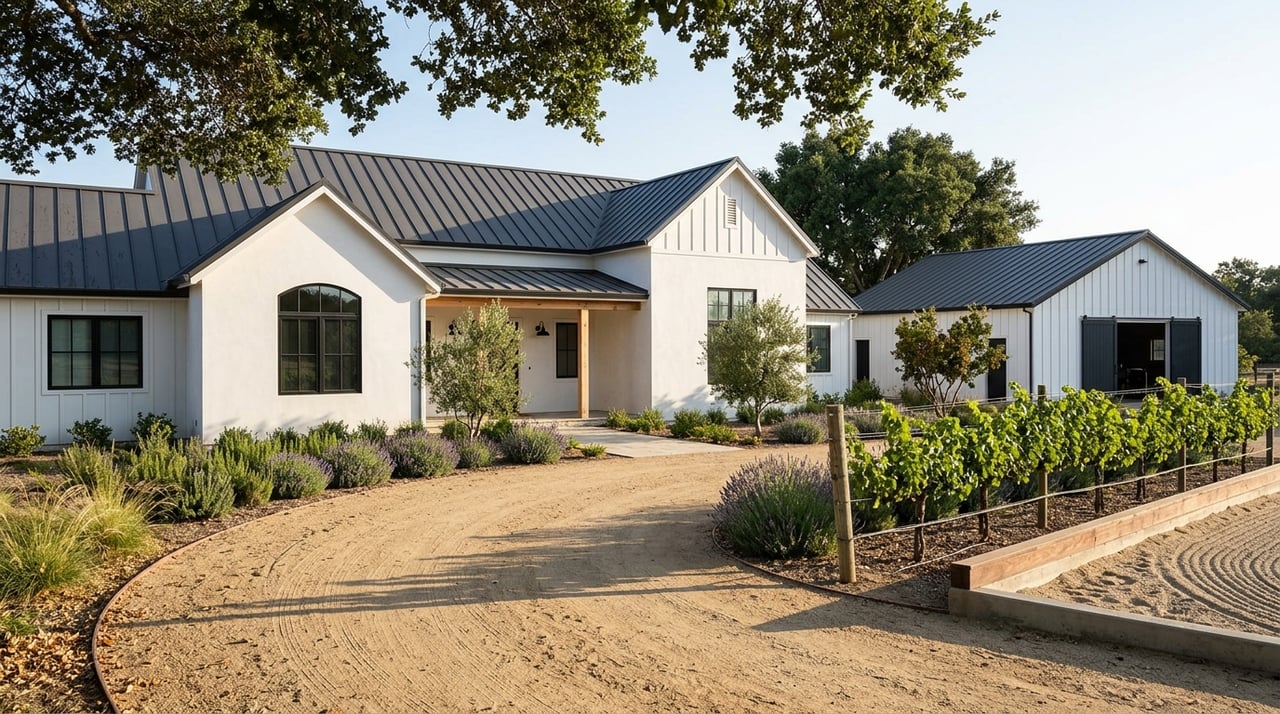
Is Cotati Acreage the Right Market for Horse Property?
July 23, 2026
July 23, 2026
Looking for acreage near Sonoma horse country without jumping straight into a massive rural estate? Cotati can be an appealing middle ground. If you want land that feels more equestrian-capable than suburban, but not necessarily as expansive as Petaluma’s larger ranch and vineyard holdings, Cotati deserves a closer look. In this guide, you’ll see how Cotati acreage fits into the local horse-property landscape, what zoning and parcel details matter most, and how to think about Cotati alongside Penngrove and Petaluma. Let’s dive in.
Cotati sits in an interesting position within Sonoma County. It bridges a more built-in town setting and the broader rural land patterns that many horse-property buyers are looking for. That makes it relevant if you want access to town while still searching for acreage with room for equestrian use.
Just as important, Cotati is not defined by acreage alone. The city’s planning guidance makes clear that you need to confirm parcel jurisdiction, zoning, and property details through GIS and parcel reports. In other words, a parcel may look horse-friendly on paper, but the actual fit depends on where it sits and how it is zoned.
If you are exploring horse property in Cotati, this is the first rule to keep in mind: zoning drives suitability. Cotati’s code includes RR-1.5 and RR-1.0 districts with 1.5-acre and 1-acre minimum parcel sizes. The city’s animal-keeping standards also set a 1-acre minimum lot area and a maximum of 2 horses or cows per acre.
The city also distinguishes between where horses are allowed by right and where permits may be needed. Horses and cows are permitted in OSC, OSR, and RR districts, while they require a minor use permit in RVL. That is why two similarly sized properties can offer very different options for an equestrian buyer.
Before you get too attached to a listing, confirm these basics:
This step can save you time and help you focus on properties that align with your plans from the start.
One of the most practical parts of a Cotati acreage search is understanding who governs the parcel. Some properties are marketed as Cotati-area opportunities even when they sit outside city limits. That matters because Sonoma County rules can differ from Cotati’s local standards.
In Sonoma County’s rural code, the RRD district allows horses, cattle, sheep, goats, and similar animals on parcels over 2 acres. Horse boarding or training is also allowed there, subject to a zoning permit. The county code further allows crop production such as vines, fruit, hay, and grain, which adds another layer of interest for buyers looking at land with both equestrian and agricultural potential.
A parcel just outside city limits may offer a different use path than one inside Cotati. If your goal includes turnout space, boarding potential, training infrastructure, or future agricultural use, that boundary can shape what is realistic. For buyers at the wine-country and equestrian intersection, that is not a technical footnote. It is central to the search.
The current public sample of acreage around Cotati leans clearly horse-forward. Visible examples include a 9.99-acre equestrian property with multiple stables, paddocks, a wash rack, a tack room, a round pen, and a former arena. There is also a 13.81-acre parcel marketed as having room for barns and a horse setup, along with larger parcels at 39.25 acres and purpose-built horse facilities with extensive stall, paddock, pasture, and arena infrastructure.
Based on that sample, Cotati reads more like a horse-capable acreage market than a broad vineyard-estate market. That does not mean vineyard potential is absent. It means that the visible pattern today points more often toward equestrian setups, mid-size acreage, and practical land use rather than the larger mixed vineyard-and-horse compounds seen elsewhere.
Cotati makes the most sense when you view it beside Penngrove and Petaluma. These three areas are close geographically, but they often serve different buyer goals. Knowing that can help you search with better focus.
Penngrove appears to function as the immediate rural edge to Cotati. Current public inventory includes smaller horse-farm footprints such as 2.16-acre and 2.44-acre properties with barns, fenced pasture, corrals, and storage buildings, plus a 8-acre property set up as a working horse facility.
That pattern gives Penngrove a farmstead feel. You may find horse infrastructure and usable land without necessarily stepping into a larger estate scale. Public samples also show occasional vineyard-capable acreage there, which adds flexibility for some buyers.
Petaluma is the broader and more mature horse-and-vineyard market in this trio. Public inventory ranges from very small lots to large rural holdings of 95 acres and 126 acres. The amenity mix also runs deeper, including sand arenas, dairy barns, cross-fenced pastures, developed water systems, vine acreage, and properties with significant stall counts and both indoor and outdoor arenas.
If you are seeking a true vineyard-plus-equestrian compound, Petaluma currently shows more scale and more mature infrastructure than Cotati. Cotati, by contrast, can be a more targeted option if you want horse-country utility without starting at the largest end of the market.
For many buyers, Cotati works best as a smaller-scale horse-country option. It can appeal to someone who wants acreage, a manageable footprint, and proximity to town, while still prioritizing barns, paddocks, round pens, or arena potential. It may also suit buyers who value flexibility and are willing to do careful zoning review before making a move.
This can be especially attractive if your wish list includes a lifestyle property rather than a full estate compound. Cotati’s visible inventory suggests room for horse use, practical outbuildings, and mid-size parcels that can support an equestrian setup. That is a different value proposition from chasing a fully developed vineyard-and-arena estate in a larger market.
When you evaluate acreage in and around Cotati, the most useful checklist is often the practical one. Public listing patterns keep repeating the same priorities because they shape how the property works day to day.
Look closely at:
These details tell you much more than a headline acreage number. A smaller parcel with the right layout and infrastructure may serve you better than a larger parcel with fewer improvements.
If you are comparing Cotati acreage, start by matching the property to your real goal. Are you looking for a private horse property with manageable land? A parcel with room to add equestrian improvements? Or a rural holding that may blend horse use with limited agricultural potential?
From there, sort options into three buckets:
Area | Best fit for | Typical public pattern |
|---|---|---|
Cotati | Mid-size horse-capable acreage | Horse-forward parcels, practical equestrian setups |
Penngrove | Farmstead-style rural edge | Smaller horse properties, barns, pasture, occasional vineyard potential |
Petaluma | Larger horse and vineyard estates | Broader scale, deeper infrastructure, more mature mixed-use estates |
This framework is not a formal market classification. It is a plain-English way to interpret today’s zoning context and visible inventory patterns.
Cotati can make a great deal of sense if you want a property that sits between town convenience and Sonoma horse-country functionality. The market’s visible acreage inventory suggests a stronger equestrian identity than a vineyard-estate identity, especially in the mid-size parcel range. For the right buyer, that can be exactly the point.
The key is careful due diligence. In Cotati, horse suitability depends on zoning, parcel jurisdiction, and the permit path, not just on how many acres a listing shows. If you approach the search with that lens, you can evaluate Cotati much more clearly and compare it confidently with Penngrove and Petaluma.
If you are exploring horse-capable acreage in Sonoma County and want a more discreet, expert-guided search, Nancy Manning offers a curated approach shaped around land use, equine infrastructure, and the nuances of wine-country property.


luxury real estate
Nancy’s specialty is Country and Equestrian Property, which are unique, with wells, septic systems, barns and out buildings, often irrigation and riparian water rights that most real estate agent have no experience with. As an owner of a commercial horse facility, Nancy has personal experience managing all of this and is the agent you want representing you when buying or selling Country Property in Northern California.