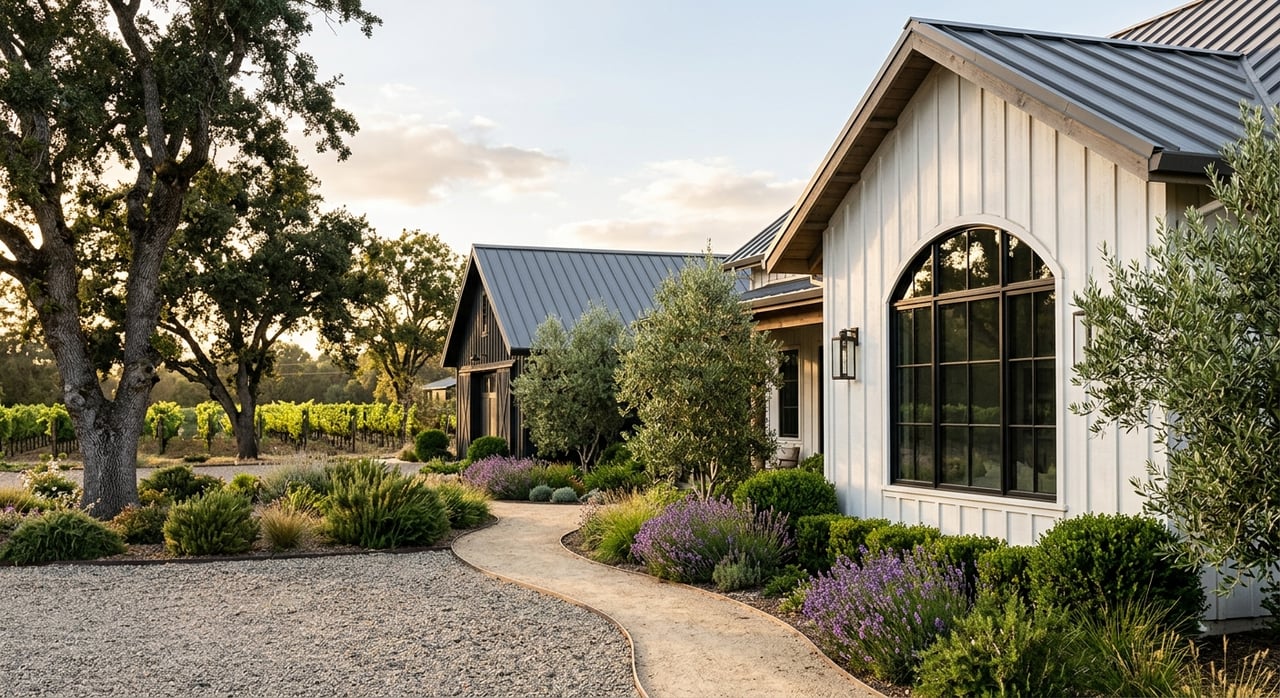
Cotati Ranch and Acreage Market Guide for Equestrian Buyers
May 14, 2026
May 14, 2026
If you are searching for equestrian acreage near Sonoma County’s wine-country core, Cotati can look deceptively simple on a map. In reality, it is a very small city with limited true acreage supply, which means each parcel tends to trade on its own mix of land usability, horse infrastructure, and local rules. This snapshot will help you understand how Cotati compares with nearby options, what features matter most, and what to verify before you tour. Let’s dive in.
Cotati covers just 1.87 square miles and had an estimated 7,403 residents in 2024. That small footprint naturally limits the number of acreage-capable properties that come to market.
For equestrian buyers, that matters because Cotati does not behave like a broad ranch market with steady turnover. Instead, inventory is thin, pricing can vary widely, and a single distinctive property can shape the local picture.
Public market data reflects that unevenness. One March 2026 snapshot showed a $460,000 median sale price for all home types in Cotati, while a 94931 ZIP snapshot showed a $912,000 median sale price, $473 per square foot, 100% sales-to-list, and 35 median days on market. In a small market, those differences are best read as directional rather than definitive.
If you want land in Cotati, your choices may be limited at any given moment. A recent land search showed just 4 listings, ranging from about 1.81 acres to 43.18 acres and roughly $389,000 to $1.649 million.
That is a narrow pipeline for buyers who need room for horses, barns, turnout, or future improvements. It also means you may need to act with patience and flexibility, especially if you have a specific checklist.
Recent and active examples help show how broad the pricing band can be. An 11.86-acre West Railroad property was listed at $1.3 million and included a large barn, while a 13.81-acre Stony Point parcel was listed at $695,000 and marketed with room for outbuildings and horse use.
At the higher end, a 20 Acre Equestrian Facility listing of mine last year on East Railroad Ave sold for $3.8 million with arenas, barns, stalls, paddocks, and pastures. An 8.03-acre Willow Avenue property closed at $1.518 million and included two houses on one lot.
The takeaway is simple: price per acre alone will not tell you enough. Improvements, layout, access, and usable ground can shift value dramatically.
When you evaluate acreage in Cotati, the most important question is not just how much land you are buying. It is how much of that land is practical for horses and daily use.
Listings that stand out for equestrian buyers often share a common set of features. These include level or gently rolling terrain, pasture, cross-fencing, paddocks, barns, arenas, round pens, and workable access for trailers and service vehicles.
A parcel can sound impressive on paper but feel limited in practice. Slope, awkward layout, decorative open space, or poorly placed structures can reduce how functional the acreage really is.
If your goal is riding, turnout, or a future training setup, you will want to look closely at the actual working footprint. In a thin market like Cotati, a smaller parcel with stronger utility can outperform a larger parcel with constraints.
Water, utilities, and ingress and egress can shape both cost and usability. Cotati acreage listings reference features like wells, multiple gates, and Highway 101 access, all of which can influence day-to-day convenience.
Permit Sonoma parcel tools also identify parcel-specific items such as groundwater availability and Williamson Act status. These details can affect how a property may be improved or used, so they are worth checking early in your search.
Turnkey infrastructure often carries a premium, but it can also reduce uncertainty. Barns, stalls, paddocks, fencing, and arenas represent both capital investment and time saved.
That said, not all improvements offer the same value. Condition, layout, drainage, circulation, and footing quality matter just as much as having the structure itself.
In Sonoma County, zoning is a gatekeeper for horse use. If you are considering a parcel for more than personal enjoyment, this is one of the first items to verify.
Permit Sonoma states that horse boarding is allowed only in certain zoning districts. It also notes that on parcels 2 acres or smaller, horse count is limited to one horse per 20,000 square feet.
If you want a property for boarding, lessons, training, or future expansion, parcel-specific zoning should be confirmed before you get too far into the process. Marketing remarks can be helpful, but they are not a substitute for checking local rules.
The same principle applies if you are also thinking about an ADU, subdivision potential, or other long-term land-use plans. Those questions should be reviewed through Permit Sonoma zoning and subdivision rules, not assumed from the listing description.
Cotati is rarely the only option for equestrian buyers looking in this part of Sonoma County. Petaluma and Penngrove often enter the conversation because they offer different combinations of inventory, competition, and pricing.
Petaluma is the deeper nearby market. One March 2026 snapshot showed a median sale price of $880,000, with homes receiving 3 offers on average and selling in about 22 days, while another showed 124 homes for sale, a $915,000 median list price, and 24 days on market.
For acreage buyers, that larger inventory base can mean more comparables and more opportunities. It can also mean more competition for well-improved horse properties, especially those with barns, arenas, paddocks, and practical access.
A recent land search showed 21 land results in Petaluma, and a horse-barn search showed 6 homes. Property examples ranged from an 8-acre West Petaluma estate with a two-stall horse barn to a 118.25-acre horse property with covered and outdoor arenas, a six-stall barn, paddocks, and pastures.
Penngrove tends to feel more rural and more limited in supply. A recent 94951 snapshot showed 11 homes for sale, a $1.39 million median list price, and 84 days on market, while another market read described it as somewhat competitive, with homes selling in around 56 days and averaging about 2% above list.
Land supply was also thin, with 4 listings ranging from 0.7 to 29.89 acres. Recent examples included a 4-acre horse property with a barn and a 10-acre ranch with a horse barn, equestrian area, shops, and outbuildings.
Cotati is the most supply-constrained of the group, so acreage there is less common and often highly individualized. Petaluma offers the most depth but also the strongest competitive pressure.
Penngrove falls between them as a smaller rural-premium market, where fewer listings and higher asking prices can make each sale especially influential. If you are comparing across all three, look beyond headline price and focus on what you are truly getting in usable land and infrastructure.
Large parcels can offer flexibility and privacy, but they also come with exposure you should evaluate carefully. Climate-related risk is part of that picture in Sonoma County.
One county-level climate snapshot indicated severe flood risk on 34% of properties and wildfire risk on 85% of properties. A Penngrove market page showed 10% of properties at severe flood risk and 100% with wildfire risk over 30 years.
These figures do not define any one parcel, but they are a reminder to investigate site-specific conditions. For equestrian properties, drainage, defensible space, road access, and infrastructure placement can all affect both operations and carrying costs.
When you narrow in on a property, keep your review focused on function first. A polished listing can be appealing, but equestrian value lives in the details.
Use this shortlist as a starting point:
In a small market, it is easy to overpay for appearances or overlook hidden limitations. The right parcel is rarely just about acreage size or a headline list price.
For equestrian buyers, the better question is whether the property supports your horses, your lifestyle, and your long-term plans with fewer compromises. That requires a clear read on land utility, infrastructure, and local rules.
If you are exploring Cotati, Petaluma, or Penngrove and want a more private, detail-driven search, Nancy Manning offers a curated approach tailored to equestrian properties based on her years of experience owning a running a Professional Horse Training and Boarding Facility.
wine country property
wine country property
country property


Nancy’s specialty is Country and Equestrian Property, which are unique, with wells, septic systems, barns and out buildings, often irrigation and riparian water rights that most real estate agent have no experience with. As an owner of a commercial horse facility, Nancy has personal experience managing all of this and is the agent you want representing you when buying or selling Country Property in Northern California.